Why Night Sip Tea Changes Color With Citrus Drops
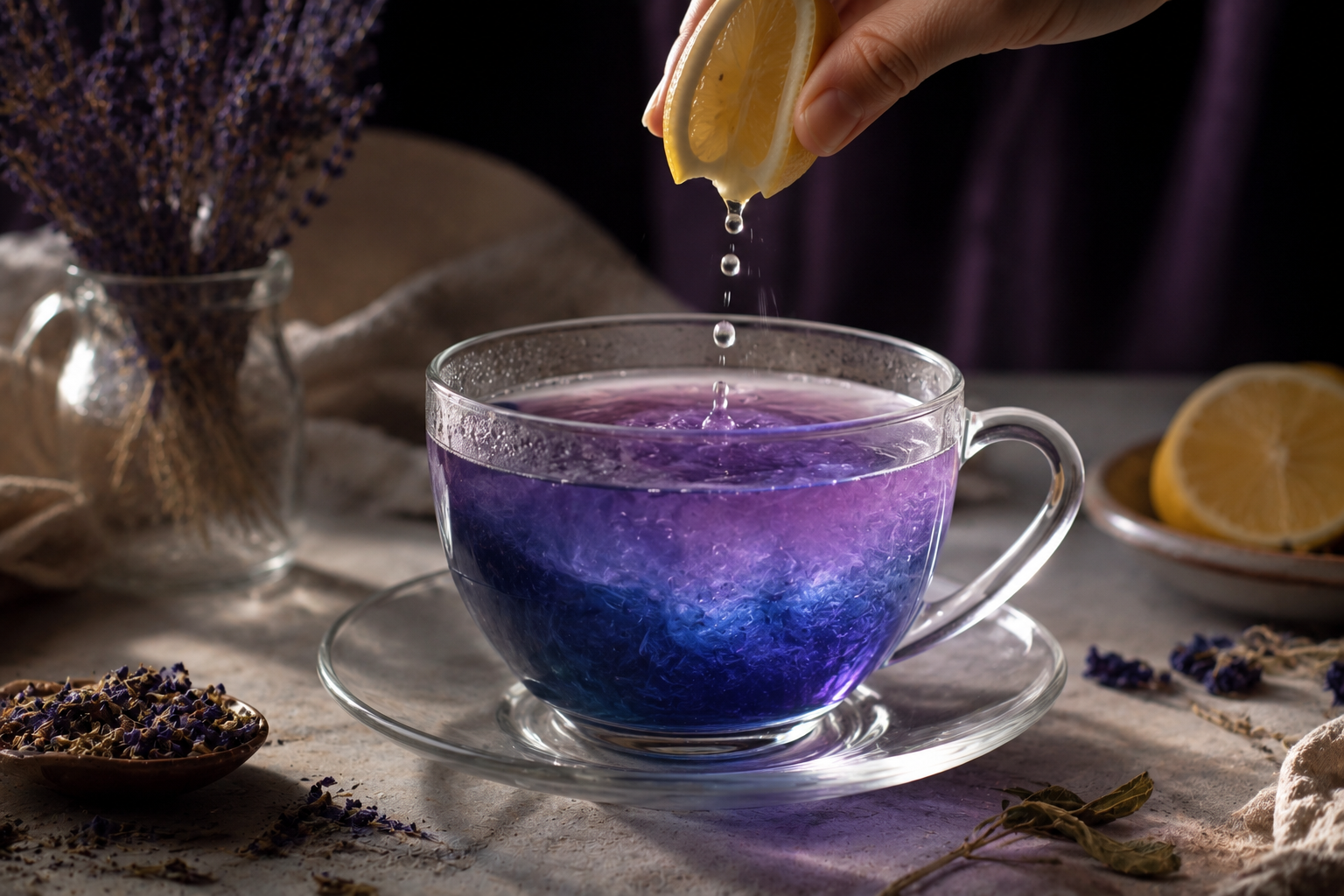
The first time someone squeezes lemon into Night Sip Tea and watches it shift from deep indigo to soft violet-pink in real time, the usual reaction is to assume it's a trick. It isn't - it's straightforward chemistry, and it's the same phenomenon behind litmus paper.
The pigment doing the work
Butterfly pea flower (Clitoria ternatea) contains anthocyanins - the same broad family of plant pigments responsible for the color in red cabbage, blueberries, and purple grapes. Anthocyanins are natural pH indicators: their molecular structure physically reconfigures depending on how acidic or alkaline the surrounding liquid is, which changes which wavelengths of light they absorb and reflect.
- Neutral water (around pH 7): the brew sits a deep, almost inky blue.
- Add something acidic - lemon, lime: the anthocyanins shift structure and the color moves toward violet, then pink, as acidity increases.
It's the same reaction as red cabbage water - butterfly pea just happens to taste far better brewed as tea.
Does the color change affect the calming effect?
No - the compounds responsible for Night Sip's calming reputation (largely from the chamomile and lavender blended alongside the butterfly pea) aren't pH-sensitive the way anthocyanins are. The color show is genuinely just a color show. That said, it's a nice, low-effort way to make a bedtime ritual feel a little more like an occasion - which, per the mindful brewing piece above, is most of what a wind-down ritual is actually for.
Ready to taste it for yourself?
Shop the Collection