Understanding Adaptogens Inside Body Balance Blends
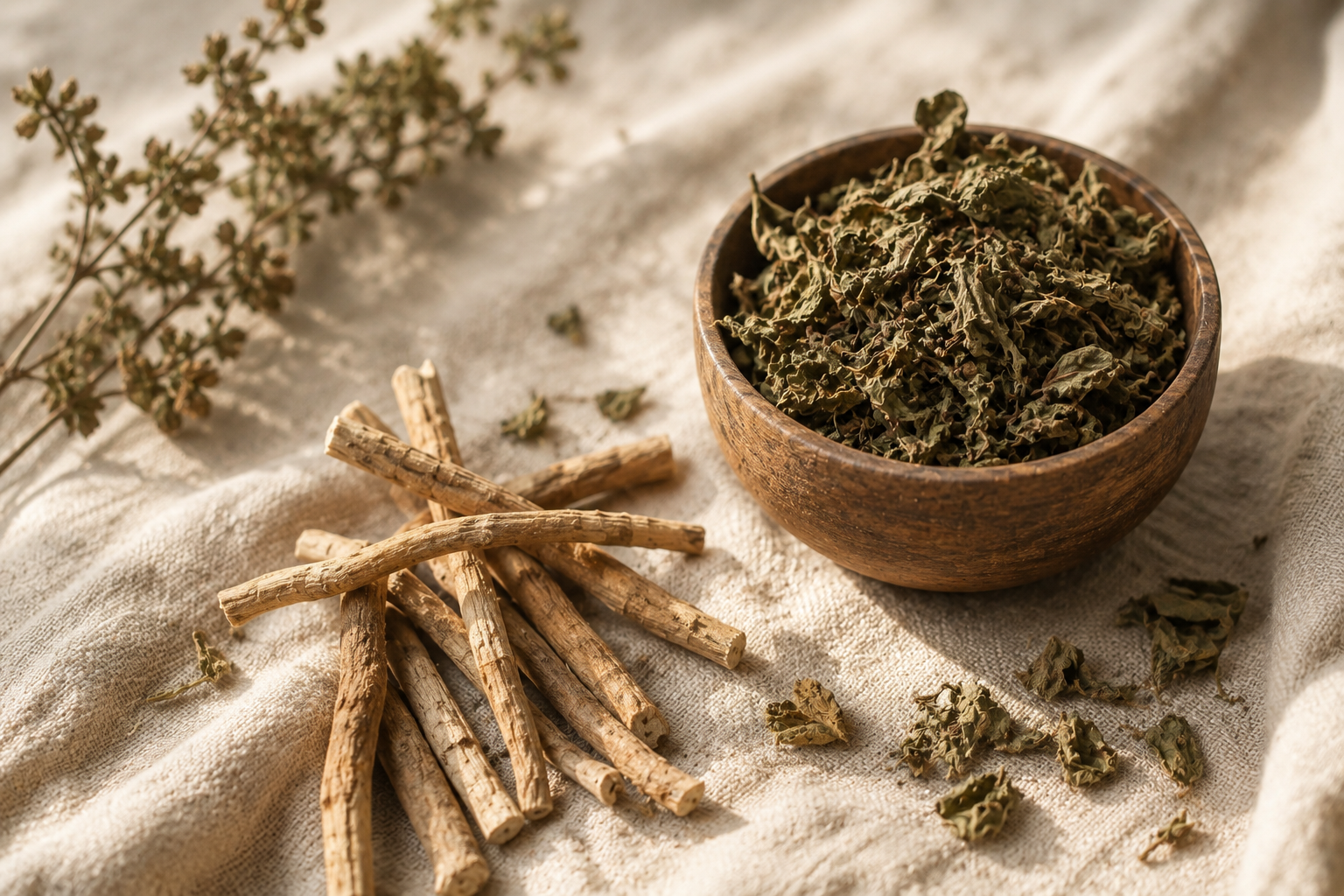
"Adaptogen" gets thrown around loosely in wellness marketing, so it's worth being precise about what the word actually means - and what it doesn't. An adaptogen isn't a sedative and it isn't a stimulant. It's a class of plant compounds believed to help the body's stress-response system return to baseline faster, regardless of which direction it's been pushed.
What's actually happening in your body
Stress - physical, mental, or environmental - triggers a cascade through your hypothalamic-pituitary-adrenal (HPA) axis, the system that regulates cortisol. In short bursts this is useful. Chronically activated, it's exhausting. Adaptogenic herbs are studied for their potential to modulate this axis rather than override it, which is why they don't produce the jittery lift of caffeine or the drowsy crash of a sedative.
What's in the blend, and why
- Ashwagandha root - among the most studied adaptogens, associated with lower perceived stress and steadier cortisol patterns.
- Holy basil (tulsi) - traditionally used for mental clarity, with modern interest in its role supporting a balanced stress response.
- Licorice root, in small measure - adds natural sweetness and has a long history in Ayurvedic and Chinese herbal systems as a "harmonizing" ingredient blended alongside stronger herbs.
Adaptogens aren't a fix for a stressful day. They're a nudge toward recovering from one faster.
Setting realistic expectations
This isn't a substitute for sleep, movement, or addressing the actual source of stress in your life - no herb is. What Body Balance is built for is the daily, low-grade wear that builds up quietly: the kind that doesn't need a crisis intervention, just a steadier baseline. That's a realistic, honest claim, and it's the one we're comfortable standing behind.
Ready to taste it for yourself?
Shop the Collection